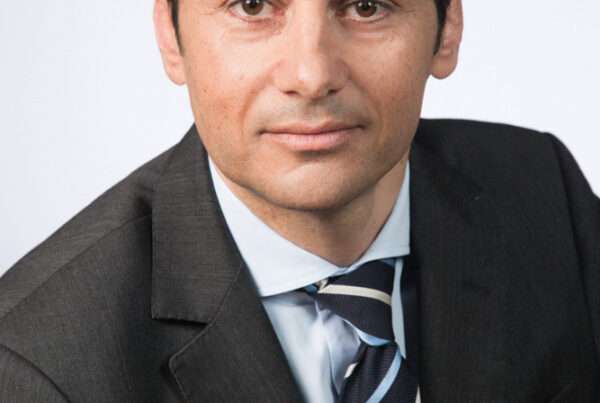
According to Jan-Christoph Herbst of German asset manager LAIQON, investors still underestimate how profoundly artificial intelligence will transform the economy. As manager of the LAIQON SICAV – Global Equities Unconstrained, he therefore favours companies that are already making money from the AI revolution today. He also sees opportunities in commodities, with an emphasis on copper, and in China’s industrial rise. Herbst builds his active strategy around four structural long-term trends, translated into a concentrated portfolio of around thirty stocks. ‘For us, however, active management does not mean trading a lot. It means daring to deviate significantly from the benchmark.’ With this approach, the fund has delivered an average annual return of 18% since its launch in 2013.
The strategy does indeed date back to 2013, when Jan-Christoph Herbst and three fellow managers developed a fund and portfolio strategy at MainFirst. When MainFirst recently decided to wind down its asset management activities, the managers looked for a way to preserve their track record, client relationships and investment strategy. They eventually found a new home at LAIQON, which was looking to expand its asset management business. ‘And the acquirer granted us full independence, which was an absolute prerequisite for us.’

Four structural core themes form the foundation
The investment process of the LAIQON SICAV – Global Equities Unconstrained starts with identifying long-term trends, not individual stocks, Herbst stresses. The fund’s investment team currently has the strongest conviction in artificial intelligence and automation. ‘We by no means see AI as a temporary investment cycle in the semiconductor industry, but as a technological revolution comparable to the introduction of the car or the construction of the American railway network.’ In 2022, the team also added commodities as a separate structural investment theme, focusing primarily on copper, gold and silver. The managers rarely add new themes. ‘The main pillars of the investment strategy generally remain unchanged for years. Conversely, themes are dropped when their structural growth prospects deteriorate. That is why we abandoned our earlier focus on the luxury sector.’
The rise of Asia, and China in particular, is also part of the fund’s structural investment view. According to Herbst, international equity indices do not adequately reflect how important the region will become for the future global economy. ‘Moreover, Asian equities have become cheaper relative to global equities over a long period,’ he adds.
Finally, a fourth theme determines which stocks to avoid: the rising debt burden of governments and its possible consequences for the international monetary system. ‘On the one hand, this leads us to avoid bonds and bank stocks. Higher interest rates may initially benefit banks, but a growing debt burden also increases the risk of defaults. On the other hand, given the ongoing monetary expansion, we invest in gold and silver.’
Market leaders over challengers
When selecting stocks within these themes, Jan-Christoph Herbst looks primarily for companies with sufficient pricing power to protect their margins in an inflationary environment. ‘We prefer established market leaders: we would rather buy a relatively expensive share in a technologically superior company than a cheaper share in a competitor that still has to win market share.’ In his view, Nvidia is a good example. ‘Even if Nvidia were to lose market share in the coming years, that need not be a problem as long as the overall market for AI infrastructure continues to grow strongly. After all, in a fast-growing sector a company can generate significantly higher revenue without maintaining its dominant market share.’
He also prefers founder-led companies. In his view, these tend to have a longer investment horizon and are less inclined to tailor their strategy to the next quarterly results. He also likes companies that reinvest most of their profits in their own operations rather than paying out large dividends.
Organic revenue growth
Ultimately, the most important yardstick in stock selection is organic revenue growth. Herbst is convinced that long-term share price performance is closely linked to a company’s ability to grow its revenue under its own steam – in other words, organically. He and his team therefore aim to build a portfolio of companies that achieve average organic revenue growth of around 20% a year. ‘Since inception, that annual revenue growth has averaged 21%, and over the same period we have delivered an average return of around 18% after fees.’
Yet high growth alone is not enough, he adds. In his view, the key question is whether a company’s valuation is justified by its long-term growth potential. ‘We therefore focus primarily on the relationship between valuation and growth, rather than simply on the companies with the highest growth rates. That relationship forms the basis of our internal valuation model.’ Ultimately, Herbst assumes that share prices follow companies’ fundamental growth over the long term, even though market fluctuations can distort that relationship in the short term. ‘However, we never let ourselves be guided by those short-term market movements.’
AI: infrastructure rather than language models
Turning to the fund’s most important theme, the AI breakthrough, Herbst draws a clear distinction within it. ‘Although developers of large language models such as OpenAI and Anthropic attract a great deal of attention, that is not where I see the most attractive investment opportunities. Competition is intense, the investments are enormous and it remains uncertain when these companies will become sustainably profitable.’ He therefore prefers to focus on companies that are already making money from AI today. Besides semiconductor manufacturers such as Nvidia, TSMC and SK Hynix, he is also interested in the major cloud platforms, which naturally leads him to Amazon and Alphabet. It comes as no surprise, then, that these names feature among the fund’s top 10 holdings (see below).
According to Herbst, these companies enjoy a structural competitive advantage. ‘They not only rent out computing power, but also offer a complete range of services that enable businesses to integrate AI into their existing processes. Their long-standing client relationships and experience in managing sensitive corporate data are important assets in this respect.’ He draws a parallel with Microsoft Windows. ‘My long-term view is that the major cloud companies could become the operating system for AI applications within enterprises.’

AI agents as a new growth engine
For now, Herbst sees little evidence that the wave of AI investment is slowing. On the contrary, he believes the rise of autonomous AI agents in particular will further boost demand for computing power. Unlike traditional AI applications, these systems can carry out complex tasks independently. He points to a Goldman Sachs study that projects a possible 24-fold increase in token consumption between mid-2026 and 2030. ‘That forecast illustrates just how much growth potential AI infrastructure still has.’
Nor do the many recent warnings from technology leaders about the risks of overly rapid AI development change his conviction. Herbst distinguishes between responsibly pacing development and actually scaling back investment. ‘The latter is by no means the case. Moreover, I suspect that the calls for stricter regulation from the established market leaders are partly intended to protect their competitive position. We saw the same thing a few years ago with Meta, which advocated stricter regulation in order to cement Facebook’s strong position.’ Either way, Herbst’s conclusion remains unchanged: the structural growth of AI is only just beginning.
Copper: a structural supply problem
The AI investment wave brings Herbst to another structural investment theme: commodities, and copper in particular. ‘Data centres, electric vehicles and the further electrification of the economy all require substantial amounts of copper. But while demand appears to be rising structurally, problems are mounting on the supply side. The number of major new copper discoveries has fallen sharply over the past decade, and it takes many years for a copper deposit to move from discovery to actual production.’
And that is before the manager of the LAIQON SICAV – Global Equities Unconstrained even mentions the rapidly growing demand from China. ‘The country currently accounts for around 60 to 70% of additional global copper demand. The electrification of the Chinese vehicle fleet, the enormous growth in renewable energy and the expansion of the electricity grids this requires will continue to drive Chinese demand in particular.’
Herbst declines to comment on where copper prices are heading in the short term. In his view, too many unpredictable factors come into play, such as geopolitical events. Over the longer term, however, he is convinced prices will rise. To play this theme, the fund invests in companies including Canada’s Ivanhoe Mines. ‘We consider the company one of the more interesting players in the sector because, unlike many established mining companies, Ivanhoe Mines can benefit from the development of new production capacity.’
Asia: growth opportunities beyond the traditional equity indices
In Asia, too, the Frankfurt-based manager sees attractive investment opportunities that, in his view, receive too little attention from international investors. ‘Over the past fifteen years, Asian equities have become steadily cheaper relative to global equities, and today those valuations do not adequately reflect the region’s growth potential. We currently see the greatest opportunities in companies that benefit from China’s growing industrial and technological dominance.’
Battery manufacturer CATL is one of his favourites. ‘Thanks to its scale and leading market position, the company enjoys significant competitive advantages. Moreover, CATL benefits not only from the electrification of the vehicle fleet but also from growing demand for energy storage.’ Herbst also sees opportunities in the Chinese semiconductor industry, even though the country still lags behind Taiwan and South Korea technologically.
He does point out, however, that the Chinese consumer remains the weak link for now. ‘Consumer confidence has still not sufficiently recovered from the COVID-19 pandemic, while Chinese households continue to save heavily.’ He sees far fewer opportunities in this segment.
Humanoid robots as the next industrial revolution
In his view, however, the biggest opportunities in Asia lie in humanoid robots, a field in which China has built up a technological lead. ‘Thanks to its enormous industrial base and its investments in robotics, China is well positioned to benefit from this new growth market. Humanoid robots are, incidentally, one of the most underestimated developments in AI. I also expect AI to be increasingly applied in the physical world.’ Herbst sees China’s Unitree and America’s Tesla as key players. Given geopolitical and security interests, however, he expects separate regional markets to continue developing side by side.
According to Herbst, the main growth driver for robots is economic and demographic. ‘China is grappling with an ageing population and a shrinking workforce, while labour-intensive jobs are becoming less and less attractive. As a result, I expect wage costs to rise, while humanoid robots are becoming cheaper.’ He outlines a scenario in which labour costs in China rise to USD 10–15 per hour, while the operating costs of robots fall to USD 1.50–2. In his view, that would make robotisation particularly attractive for a country that accounts for more than 30% of global industrial output.
The answer to the rise of passive investing
Finally, Herbst uses his concentrated investment strategy to clearly set himself apart from the growing market for passive investing. He acknowledges that the rise of index funds and ETFs is a structural development that will not simply go away. ‘Investors have become more cost-conscious. Younger generations in particular are increasingly asking why they should pay higher management fees when they can invest cheaply in a broad equity index. For smaller independent asset managers, that is a major challenge.’
Herbst, however, does not see this as a reason to bring the portfolio closer to the benchmark. In his view, an active manager who barely deviates from the benchmark index has little scope to outperform structurally once the higher costs have been deducted. ‘The only solution, as I see it, is to make clear that we do exactly the opposite of passive investing. That is why we deliberately opt for a limited number of companies and a clear-cut view on a handful of structural investment themes.’ Herbst adds that this concentration is not necessarily at odds with responsible portfolio management. He refers to research showing that most company-specific risk can be eliminated by building a portfolio of around twenty to forty different stocks. Beyond that, he argues, the additional diversification benefit of even larger portfolios diminishes steadily, while it becomes harder to maintain a distinctive investment view.