
César Pérez Ruiz, Chief Investments Officer Pictet Wealth Management
The week in review
The US Federal Reserve raised interest rates for the first time since 2023 in a unanimous decision that defied calls from President Donald Trump to lower the cost of borrowing. Members of the Federal Open Market Committee (FOMC) also updated their “dot plot” projections to show most penciling in another hike this year. The US 10-year Treasury yield crossed 5% and reached its highest level since 2007. More importantly, the yield curve flattened, meaning short-term yields rose faster than long-term yields, dragging on shares in banks, which typically borrow short and lend long. Bank of America also warned of weaker trading and dealmaking revenue. The S&P 500 fell 0.1%.
The Bank of Japan (BoJ) raised its benchmark rate by 25 basis points to 1.25%, marking its highest level in 31 years. The decision passed with a 7–2 split vote. The yen fell after the BoJ failed to deliver a unified, aggressively hawkish outlook.
In the US, the average diesel price hit a record high of USD 6.27 per gallon. Senate Majority Leader John Thune said he is “open to exploring” an export ban for diesel fuel.
In Germany, Chancellor Friedrich Merz vowed to stay on despite the far-right Alternative for Germany (AfD) becoming the largest party in the former East German state of Mecklenburg-Vorpommern. The AfD and Moscow are preparing talks to get Russian gas flowing back to Germany, media reported.
Quote of the week
“I’m relying on Kevin (Warsh), but he’s got, you know, a very tough board,” Trump said of the Fed Chair. “I talked to Kevin, and I said, ‘You might as well vote with the board. It’s not going to matter’.”
Key data
US retail and food services sales rose 1.2% in August from the prior month, beating forecasts and reversing a July decline. The Atlanta Fed’s GDPNow model raised its estimate for third quarter real gross domestic product growth to an annualised 5.1%. One weak spot in the US economy is housing, with homebuilder sentiment falling to a one-year low in September.
In China, retail sales grew just 0.4% in August, falling short of the 0.8% economists had forecast.
Market view
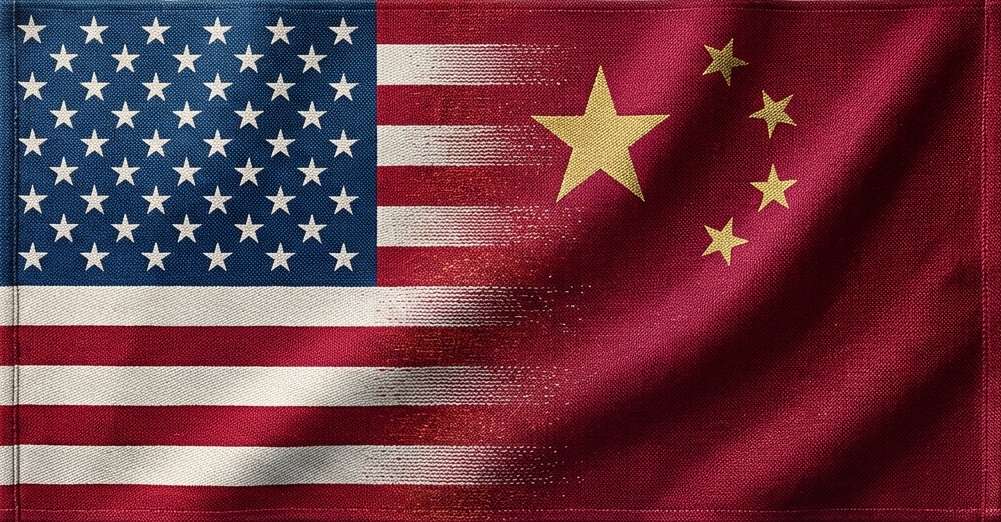
Trump hosts Chinese President Xi Jinping in Washington this week for their second meeting this year. The Iran conflict, the artificial intelligence (AI) boom, and trade will be on the agenda. The US-China tariff truce, which ends in November, will be in focus. China cut its holdings of US Treasuries to an 18-year-low in July. We are underweight bonds.
To support growth, China intends to invest heavily in AI infrastructure over 2026-2030. We are positive copper and miners. Germany is reportedly preparing a far-reaching package of economic-security measures to shield strategic industries from China. Volkswagen, which has been in steady decline in China, issued a profit warning.
In the tech sphere, Microsoft issued a provisional code of conduct to establish clear boundaries for its upcoming AI models, after Anthropic and OpenAI leaders agreed to slow development speed. We prefer to invest in AI via its beneficiaries than its enablers.
This week, markets will focus on Purchasing Managers’ Indices from the US and the Eurozone, and the University of Michigan Consumer Sentiment Index. It is the end of an era for investors as Warren Buffett stepped down as chairman of Berkshire Hathaway after six decades.
Will history rhyme this time?
Across every Fed hiking cycle since 1988, the S&P 500 index has initially rallied on average in the weeks following the first hike, before rolling over to a trough roughly 40 days later as tighter financial conditions begin to bite. The subsequent recovery has historically been gradual. With the Fed having just delivered the first rate hike of a new tightening cycle last week, this historical pattern is worth keeping in mind, particularly as equity markets have been resilient lately, supported by strong earnings growth.







Pictet-Clean Energy Transition: From Capex to Content – The other semiconductor story