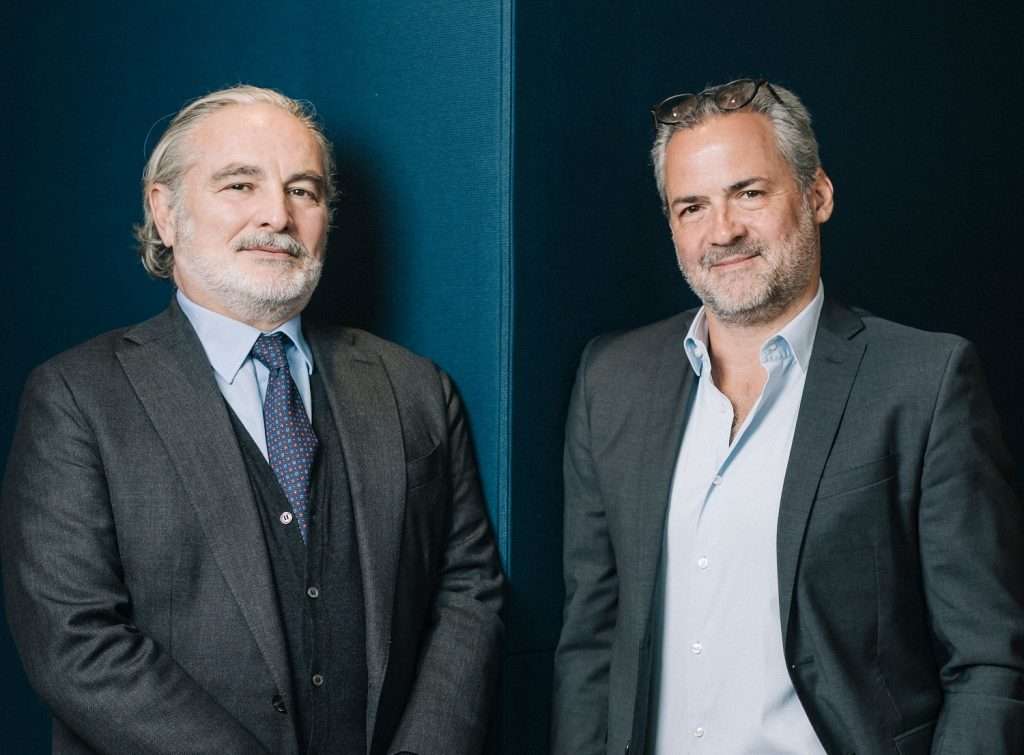
As the year draws to a close, David Kruk, Head of the Trading Desk at La Financière de l’Échiquier (LFDE), a privileged witness and keen observer, and Pierre Puybasset, spokesman for LFDE’s asset management division, share their feelings. While Michael Burry, Big Short, warned again…
“Powell left the door open for a rate cut in January.”
The Fed remains reassuring for 2026. At the last meeting of the year, Fed Chairman Jerome Powel left the door open to a possible rate cut in January, as the job market slows. In 2026, the market is forecasting two to three falls, the third of which is likely to be around 25% in mid-December. “It’s positive that December didn’t sow any additional risks,” explains David Kruk, head of the trading desk at LFDE.
But the question that remains is no longer inflation, which took centre stage at the start of the year, but the valuation of artificial intelligence stocks and employment. However, the specialists at LFDE are ruling out the existence of an AI bubble for the time being. Admittedly, according to Bank Of America, quoted by David Kruk, the profitability of hyperscaleers is tending to slow. “Every dollar of capex invested would generate $0.99 in additional revenue between 2021 and 2024. Over the next few years (2025/2028), this figure is projected to rise to 0.5 dollars However, profitability should have an impact on other layers of the market, particularly businesses, which will begin to benefit from the use of AI.
At the moment, tech is less popular, but we’re seeing a rotation. Over the past month, the Russell index (the US small/mid-cap index) has benefited from a greater rise in their share prices than the magnificent seven. At the heart of AI’s anxieties, Oracle has lost 45% in three months, while bitcoin has lost almost a third of its value since hitting an all-time high in early October.
At present, rotation towards other securities is taking place with outflows that are not offset by inflows. “The market seems to be running out of ideas at the end of the year, even if the market drivers have changed. Good ideas can come back with the new year,” says David Kruk. However, diversification makes more sense outside the magnificent seven.
Europe still offers a PE discount of around 30% compared with the United States, compared with a historical average of 20%, says Pierre Puybasset, management spokesman at LFDE.
David Kruk adds that banking stocks and the defence sector should continue to be in demand in 2026, as growth in these sectors is likely to remain positive.
Even if the banking sector is not as popular, it does not attract as much attention as the ‘Magnificent Seven’ (the Gafams, plus Nvidia and Tesla). However, since its rebound in January 2022, the European banking stocks index has posted a performance of almost 140%, comparable to that of these giants. Since September 2022, the Eurostoxx Bank, the European banking index, has increased more than threefold, from 75 to 245. The SX7P index, which includes the continent’s 53 largest institutions, has jumped 63% since January, driven in particular by surges by Société Générale (+150% since January), Santander and Commerzbank (both +130%). And if the chorus of analysts and David Kruk are to be believed, there is more to come from European banks.
Inflation could remain moderate on the Old Continent. Chinese exports will continue to bring their share of deflation.
Brokers’ opinion
In general, brokers on the US markets remain optimistic, with projections for the S&P 500 for the end of 2026 hovering around 7,700 (the index stood at 6,880 at the end of December). For David Kruk, earnings growth is likely to remain the driving force behind the markets (Citi forecasts earnings growth of 16%, compared with 11% in 2025, while Goldman Sachs estimates a 12% increase). Tech looks set to continue to stand out, but other sectors, such as cyclicals, will also do well. They should contribute to the rise in the indices.
Excessive optimism?
According to Bank of America’s “Fund Manager Survey”, which brings together the opinions of 250 fund managers, a study quoted by David Kruk, the majority of fund managers remain optimistic. However, David Kruk does have one concern. “The average cash held in portfolios by managers has fallen to 3.3%, one of the lowest levels in recent years. This reduces the amount of cash available for purchases in the event of a market downturn. The allocation to equities and commodities is at its highest level since 2022. Another statistic is that 92% of investors are also optimistic about the direction of European markets in 2026 Excessive optimism? Perhaps not, because the latest market downturn in December has reduced the PE (price-earnings ratio) of stocks such as NVIDIA, which traded at 23.4 times earnings in mid-December (a 17% fall from its highs), explains Pierre Puybasset.
Are households the weakest link?
Having already warned of an AI bubble, Michael Burry ‘The Big Short Investor’ drew attention to a chart produced by Wells Fargo showing that US households now hold more of their wealth in equities rather than property – a rare occurrence that has only happened twice before.
“This observation, household equity wealth being higher than property wealth, only occurred in the late 1960s and late 1990s,” said Burry. “The last two times, the bear market that followed lasted for years.”
Wells Fargo, however, argued that the same chart explains why policymakers are unlikely to tolerate a deep bear market.
David Kruk, for his part, continues to believe in the wisdom of US households investing in the equity markets. In his view, European households are likely, over time, to draw inspiration from their American counterparts.
With inflation currently off the radar, the correction in so-called quality stocks seems to be coming to an end, and it is certainly too late to sell. Pierre Puybasset sees opportunities in a correction that has halved the premium on these stocks. This turnaround could favour strategies such as Echiquier Agenor Mid Cap Europe and Echiquier Major SRI Growth Europe.
After predicting a mixed December and an exceptional year, David Kruk is forecasting a rise in 2026. LFDE remains constructive on the equity markets. “There has never been a bear market in an atmosphere of falling rates and economic growth,” concludes David Kruk.
Putting shares under the Christmas tree is still a good present. January should be positive and the markets could be 10-15% higher by the end of 2026.
US retail investors still account for between 25% and 30% of daily flows.