Based in Luxembourg, the company, which specialises in the design and management of fund administration and accounting processes, became independent in January 2025 and received authorisation from the CSSF at the end of 2025. Julien Brenier and Mathieu Potier, two of the firm’s three co-founders and Managing Partners, share their vision for the profession, as well as their development and growth objectives for 2026–2027.
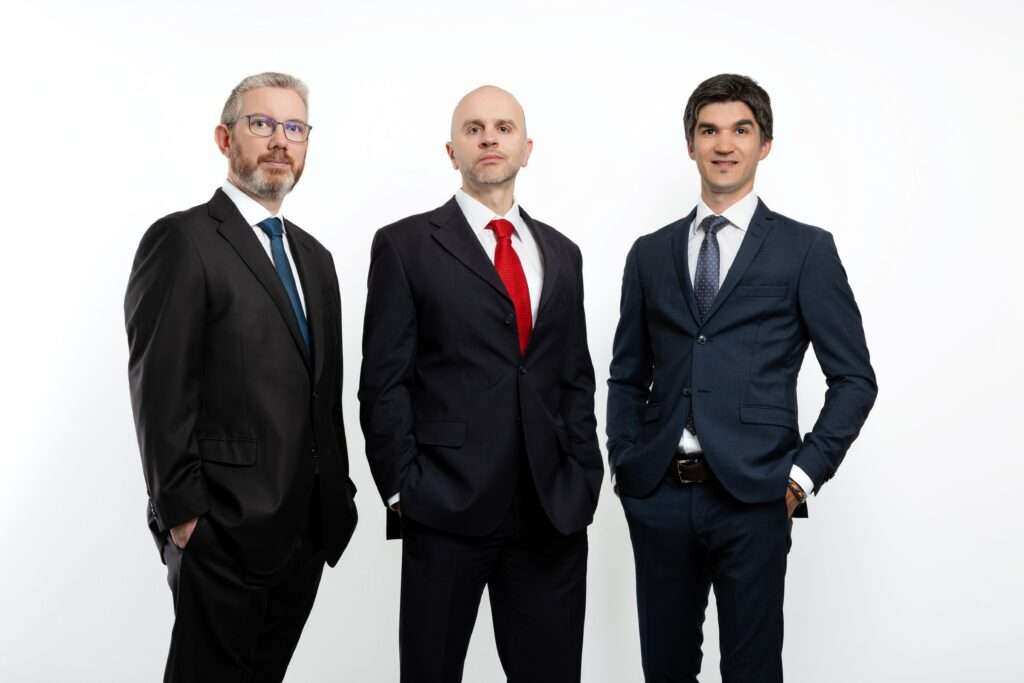
Julien Brenier and Mathieu Potier, why did you decide to set up your own business?
We have been working for a private client since 2010. This enabled us to develop a bespoke system tailored to their specific needs.
Our complementary strengths and our success in serving this long-standing client have convinced us that this is the right time to offer these services to others.
It was therefore only natural for us to take over the Luxembourg office and set up our own business. Starting from scratch, we have built a robust infrastructure capable of managing a wide range of assets.
Obtaining authorisation from the CSSF marked the start of our business development strategy. This accreditation was an essential prerequisite for lending credibility to our offering in the eyes of future partners.
Today, as independent and regulated practitioners, we can expand our client portfolio. We are therefore dedicating 2026 to marketing and expanding our business.
Who are your customers?
These include family offices, private equity firms and AIFMs. We focus on small and medium-sized investment firms. Indeed, the major players in the Luxembourg fund administration market often exclude assets under management of less than 500 million euros, considering them too modest. This presents an opportunity for us to serve this neglected segment. Whereas large companies generally have their own analysts to process data and produce dashboards. We offer these services to organisations that do not have the in-house resources or that simply do not wish to carry out this work themselves.
Geographically speaking, we are targeting OECD member countries. Our clients may be based in Europe, the United States or elsewhere, provided they have an investment vehicle domiciled in Luxembourg.
What added value do you bring to these clients?
First of all, our team is stable and has been working together for over 15 years. We also work with an external IT expert, a trusted partner since 2010. This stability is a mark of quality for our clients, particularly for family offices seeking a relationship based on trust and a thorough understanding of their needs.
Our added value also lies in our ability to process accounting data to extract information that fund managers can use. We don’t just produce figures; we present them in a way that helps them make decisions. Our role is to provide reliable and actionable data.
Working for a family office involves a direct relationship with the ultimate beneficiaries. And unlike a traditional fund, where investors are often anonymous, we are required to meet higher standards of transparency, responsiveness and real-time reporting.
What lessons have you learnt from these years of working with a family office?
That experience proved to be a turning point. We have a thorough understanding of all the technical aspects involved in managing a diversified portfolio. In terms of soft skills, we have learnt to recognise that every figure has a direct impact on the families we serve. All data must be accurate, explainable and justifiable. This chain of responsibility therefore requires us to exercise the utmost rigour.
Why did you opt for CSSF accreditation rather than simply setting up an accountancy firm?
Without this authorisation, we would have been limited to unregulated entities, which might have undermined our credibility with certain clients. This authorisation enables us to work with regulated entities, thereby broadening our scope of operations. It also strengthens our legitimacy and our ability to meet the requirements of regulated clients. Finally, it demonstrates our commitment to high standards of compliance and control.
What is your business vision?
We want to change the perception of fund administration, which is often seen as nothing more than a cost centre. When carried out effectively, using the right tools and relevant information (particularly via dashboards), it becomes a strategic tool for managers, facilitating decision-making and investment management.
And our objective for 2026–2027 is clear: to attract new customers, seize new opportunities and establish ourselves as a trusted partner, offering an alternative to the major players in the market. The systems and processes we have developed can be adapted and offered to a wider client base, whilst maintaining our quality standards.
To this end, we rely on our unique selling points and our pragmatic approach. We are an agile, responsive organisation capable of offering a personalised service. And we aim to meet our customers’ specific needs.
What are the challenges involved in attracting new customers?
The main challenge lies in the slowness of the processes involved in changing directors. AIFMs generally have a limited number of investment vehicles. And it is rare for them to change administrators part-way through a cycle, unless there are major problems (VNI errors, poor service quality, etc.).
How do geopolitical, economic and monetary factors, amongst others, affect your line of work?
In purely financial terms, erratic behaviour, contradictory statements, conflicts or inflation have an impact on financial products; and, by extension, on the performance of funds.
As administrators, however, we operate further down the chain. And our role consists mainly of producing accounting data and reports. Whether the markets are volatile or stable, the volume of transactions we process therefore does not fluctuate significantly.
In times of volatility, however, we place even greater emphasis on the rigour of our controls. Our clients and investors do indeed expect NAVs that accurately reflect their investments.